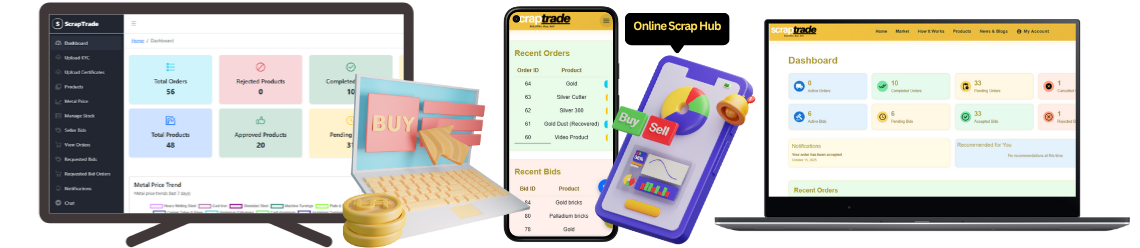

The scrap metal industry, traditionally driven by local scrap yards, manual trading, and face-to-face negotiations, is rapidly evolving. The future of scrap metal digitisation is not just about online marketplaces—it’s about transforming the entire trading ecosystem through technology, efficiency, and transparency.
Platforms like ScrapTrade are leading this digital revolution, connecting verified scrap buyers and sellers across Australia and the globe while ensuring secure transactions and real-time pricing.
Why Digitisation Matters
Digitisation in scrap trading is more than convenience—it addresses long-standing challenges in the industry:
- Transparency issues: Traditional scrap trading often suffers from inconsistent pricing and unverifiable buyers or sellers.
- Inefficiency: Manual price negotiation and physical trading slow down the market.
- Limited market access: Smaller scrap sellers and buyers struggle to reach broader audiences.
- Data scarcity: Without historical pricing and market analytics, forecasting scrap metal prices is challenging.
Digitisation solves these issues by introducing a platform where buyers and sellers interact seamlessly, pricing is transparent, and transactions are secure.
Key Trends Driving Scrap Metal Digitisation
1. Online Scrap Marketplaces
Digital platforms like ScrapTrade enable scrap sellers to showcase their materials to a global audience. Buyers can compare prices, view verified seller profiles, and purchase scrap online safely. Benefits include:
- Access to competitive bids
- Instant price discovery
- Secure, escrow-protected transactions
2. Real-Time Market Analytics
AI-powered tools and data analytics help traders make informed decisions:
- Predicting scrap metal price trends
- Tracking supply and demand fluctuations
- Comparing historical pricing for strategic planning
3. Blockchain for Transparency
Blockchain technology is emerging as a game-changer in scrap trading:
- Ensures secure and tamper-proof transaction records
- Builds trust between buyers and sellers
- Facilitates digital contracts and instant payment settlements
4. IoT & Smart Recycling
Internet of Things (IoT) devices and sensors are increasingly being used in scrap yards and recycling plants:
- Automated weight and quality measurement of scrap materials
- Real-time inventory management
- Streamlined logistics and supply chain tracking
5. Mobile Apps and On-the-Go Trading
Digitisation enables traders to manage scrap trading from anywhere:
- Mobile apps for instant bidding and selling
- Push notifications for price changes
- Integration with payment and logistics solutions
Advantages for Scrap Buyers and Sellers
Digitisation benefits all stakeholders in the scrap industry:
- Sellers: Reach verified buyers globally, get competitive bids, and sell scrap online efficiently.
- Buyers: Access a wider pool of suppliers, track price trends, and secure quality scrap reliably.
- Both: Enjoy secure transactions, faster payments, and data-driven decision-making.
The Role of ScrapTrade in the Digital Future
ScrapTrade exemplifies the digital future of scrap trading by:
- Connecting verified scrap buyers and sellers across Australia
- Providing AI-powered price forecasts and analytics
- Offering a secure platform for online scrap trading
- Streamlining logistics and ensuring compliance with recycling regulations
Conclusion
The future of scrap metal digitisation is bright and transformative. Technology is reshaping the way scrap is traded, priced, and managed—moving the industry from manual processes to efficient, transparent, and secure digital platforms.
By embracing digitisation, traders can buy scrap online or sell scrap online with confidence, access global markets, and optimize profits. Platforms like ScrapTrade are leading the way, proving that the digital era is the future of a smarter, safer, and more sustainable scrap marketplace.