Buying scrap at an industrial scale is a complex operation its not just about collecting metal or paper and selling it for cash. Businesses must navigate material grades, supply chain logistics, quality assurance, and compliance regulations to ensure profitable and safe transactions.
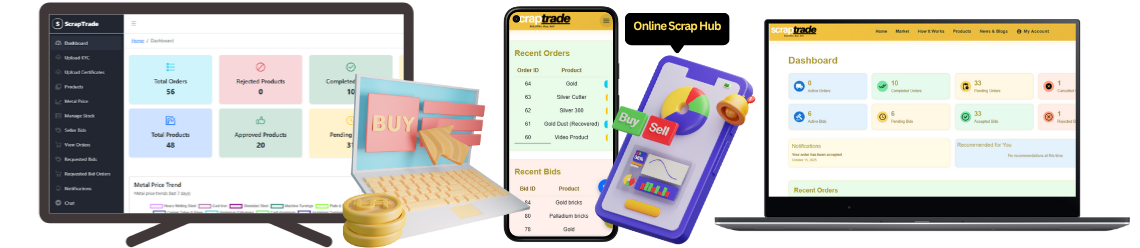
Whether youre a steel manufacturer sourcing ferrous scrap, an electronics recycler acquiring e-waste, or a plastics processor looking for high-quality feedstock, understanding technical and industrial standards is crucial. Modern platforms like ScrapTrade.com.au streamline procurement, connecting verified suppliers and buyers worldwide while providing transparency and market insights.
Understanding Scrap Material Classification
Ferrous Scrap
- Definition: Scrap containing iron or steel.
- Common Grades: HMS 1 & 2 (Heavy Melting Steel), Shredded Steel, P&S (Plate & Structural).
- Industrial Use: Steel mills, foundries, and forging plants use ferrous scrap as the primary feedstock.
- Quality Considerations: Moisture content, contamination with non-ferrous metals, and surface rust impact pricing.
Non-Ferrous Scrap
- Definition: Metals excluding iron high value and often alloy-specific.
- Common Types: Copper, Brass, Aluminium, Lead, Nickel, Zinc.
- Industrial Use: Electrical wiring, automotive components, aerospace, and precision manufacturing.
- Assessment Factors: Conductivity, alloy composition, presence of coatings, and dimensional uniformity.
E-Waste and Electronics Scrap
- Components: Printed Circuit Boards (PCBs), wiring harnesses, lithium batteries, cathode ray tubes.
- Industrial Relevance: Precious metals recovery (gold, silver, palladium), hazardous material compliance, and mechanical separation.
- Key Standards: RoHS compliance, safe handling procedures, and recovery yield optimization.
Plastic and Polymer Scrap
- Types: PET, HDPE, PVC, Polypropylene.
- Industrial Use: Injection molding, extrusion, packaging, and composite materials.
- Quality Considerations: Contamination with non-compatible polymers, color separation, and moisture content.
Technical Considerations in Scrap Procurement
Grading and Quality Assessment
Industrial buyers rely on standardized codes like ISRI (Institute of Scrap Recycling Industries) classifications for metals. These codes define scrap quality, permissible impurities, and material specifications. Accurate grading ensures consistent production quality and protects profit margins.
Essential Weighing Terms in Scrap Trading
1. Gross Weight (GW)
The total weight of a scrap shipment, including packaging, containers, pallets, or any other transport material.
- Industrial relevance: Determines initial billing before deductions for tare or moisture.
2. Tare Weight (TW)
The weight of the container, pallet, or vehicle used to transport scrap.
- Formula: Net Weight = Gross Weight Tare Weight
- Importance: Essential for accurately calculating the actual scrap content.
3. Net Weight (NW)
The actual weight of the scrap material itself, after subtracting tare weight.
- Why it matters: Prices are typically quoted per kilogram or ton of net weight.
4. Certified Weight
Weight verified by an accredited scale or weighbridge, often required for legal and contractual compliance.
- Tip: Always use certified scales to avoid disputes with buyers or regulators.
5. Moisture Weight
Some scrap, especially paper, wood, or organic-based materials, contains water that adds to gross weight but is non-recoverable.
- Adjustment: Moisture content is often subtracted to calculate dry net weight for pricing.
6. Scrap Density
The mass per unit volume, usually expressed in kg/m³ or lbs/ft³.
- Relevance: Heavier density materials (like metals) yield more profit per cubic meter; also impacts transport efficiency.
7. Load Cell Reading
Modern industrial scales, trucks, and weighbridges use load cells to measure weight.
- Technical note: Load cells convert force into an electrical signal critical for precision weighing of large or high-value scrap loads.
8. Calibration and Accuracy
- Calibration: Ensures scales provide correct measurements.
- Accuracy: Often expressed as ±0.1% or ±1kg, depending on scale type.
- Importance: Small discrepancies can mean thousands in large-scale scrap trades.
9. Weighbridge
A large platform scale for vehicles carrying bulk scrap, usually equipped with multiple load cells and integrated digital readouts.
- Usage: Standard for industrial scrap yards, ports, and large-scale scrap procurement.
10. Check Weighing
A secondary verification of weight, often done before shipment, delivery, or payment.
- Purpose: Avoids disputes and ensures compliance with buyer contracts.
Practical Tip for Scrap Traders
When using platforms like ScrapTrade.com.au:
- Always list net weight, clearly specifying moisture content and container tare.
- Use certified scales and provide weight certificates for industrial buyers.
- For high-value metals, consider specifying density and grade along with weight for transparency.
Testing and Material Verification
- XRF Analysis: Determines elemental composition for metals.
- Moisture and Density Checks: Critical for plastics and paper to avoid processing issues.
- Mechanical Inspection: Checks for structural defects or non-conforming parts in ferrous/non-ferrous scrap.
Supply Chain and Logistics
Efficient scrap procurement requires robust logistics:
- Collection & Storage: Segregated by material type to minimize contamination.
- Transport: Compliance with safety standards (covered trucks, weight limits).
- Inventory Management: Tracking inflows/outflows for just-in-time procurement and production planning.
Pricing & Market Trends
Scrap prices fluctuate based on global commodity trends, seasonal supply-demand cycles, and geopolitical factors. Industrial buyers monitor:
- LME (London Metal Exchange) rates for copper, aluminium, nickel.
- Local scrap yard pricing reports.
- Digital trading platforms like ScrapTrade.com.au for real-time global offers.
How Digital Platforms Optimize Industrial Scrap Buying
Modern scrap trading platforms bring transparency, efficiency, and risk mitigation to industrial buyers:
- Verified Supplier Network: Reduces fraud and ensures quality consistency.
- Instant Pricing and Bidding: Real-time offers streamline decision-making.
- Global Market Access: Enables competitive sourcing beyond local scrap yards.
- Logistics Support: Integration with transport providers and scheduling tools.
- Compliance and Documentation: Automated invoices, material certificates, and regulatory tracking.
Platforms like ScrapTrade.com.au allow industrial buyers to manage procurement digitally, minimizing manual effort and maximizing profitability.
FAQs
What is the best way to verify scrap quality?
Use grading standards (ISRI codes), XRF elemental testing, and visual/mechanical inspections to ensure conformity.
How do industrial buyers handle e-waste safely?
Through certified recycling procedures, proper PPE, and regulatory compliance such as RoHS and Basel Convention guidelines.
Can scrap be sourced globally?
Yes digital platforms like ScrapTrade.com.au provide access to verified international suppliers, with logistics and compliance solutions.
How are prices determined for industrial scrap?
Factors include material type, grade, global commodity rates, quantity, and logistics costs. Digital platforms provide live market data for informed buying.
Conclusion
Industrial scrap buying is a precise, technical process that combines material science, logistics, and market insight. By understanding scrap grading, quality assessment, and procurement strategies, businesses can reduce risk, optimize costs, and secure reliable feedstock for manufacturing or recycling.
ScrapTrade.com.au makes industrial scrap procurement efficient, connecting buyers with verified suppliers globally, simplifying compliance, and providing real-time market insights. Start sourcing smarter today and turn scrap into strategic advantage.