What is Ferrous Scrap?
Ferrous scrap refers to metals that contain iron (Fe). Common examples include steel, cast iron, steel beams, rebar, structural steel, car bodies, steel appliances, etc. These materials are magnetic, heavy, and are the backbone of many recycling systems because steel and iron are in high demand for construction, manufacturing, infrastructure, and similar industries.
Current Market Size & Forecast
- In 2024, the Australia ferrous scrap recycling market was valued at approximately USD 4.30 million. IMARC Group
- The market is projected to grow at a CAGR of ~5.8% between 20252033, reaching around USD 7.56 million by 2033. IMARC Group
- Another source places historical revenue lower (USD 1.4 million in 2021), but similarly forecasts growth toward USD 1.9 million by 2030, driven largely by construction and consumer goods. Grand View Research
These numbers show there’s strong expectation for growthespecially as Australia moves more toward sustainable steelmaking, regulatory pressure, and circular economy policies.
Key Drivers Shaping the Market
- Shift to Electric Arc Furnace (EAF) Steelmaking
- EAF does not rely on blast furnaces and uses recycled ferrous scrap as a primary feedstock. This technology reduces carbon emissions and encourages demand for ferrous scrap. IMARC Group
- Domestic steel manufacturers are expanding capacity in EAF operations. For example, companies like InfraBuild are investing in steel production expansions with more sustainable tech. The Australian
- Policy & Regulation
- The Australian Steel Institute (ASI) is pushing for bans on exports of unprocessed ferrous scrap, so more raw scrap stays in the country to be processed locally. steel.org.au+1
- Waste export restrictions, circular economy policies, environmental impact reporting, and government grants (e.g. for sustainable and domestic manufacturing) are improving local processing capacities. IMARC Group+1
- Landfill Reduction & Circular Economy
- As metropolitan regions approach landfill capacity (Sydney, Melbourne, Perth), theres increasing pressure from public and governmental bodies to divert ferrous metal waste away from landfill and into recycling. IMARC Group+1
- The Public Circular Economy Framework is growing: reuse, repair, recycling, and responsible waste management are becoming central to regulatory agendas. The Australian
- Infrastructure, Construction, & Manufacturing Demand
- Australia remains invested in housing, infrastructure, and manufacturing. These sectors require steel and structural materials. Recycled ferrous scrap offers a lower-carbon, cost competitive source of feedstock. IMARC Group
Key Challenges in Ferrous Scrap Recycling
- Quality & Contamination
Ferrous scrap often comes mixed with non-metallic materials (plastic, rubber, coatings, glass etc.). Cleaning, sorting, and preparing ferrous scrap adds cost and reduces margins. pc.gov.au+1 - Logistics & Transport Costs
Ferrous metals are heavy and bulky. Getting scrap to recycling plants is expensive, especially from remote or regional areas. - Market Price Volatility
Global steel prices, demand in export markets, input costs (electricity, fuel) heavily affect ferrous scrap value. The export price of ferrous scrap from Australia saw declines in some years due to these pressures. IBISWorld - Regulatory Compliance & Environmental Standards
Processing ferrous scrap comes with regulatory oversight (waste disposal levies, emissions, safety). For many recyclers, meeting these standards requires investment in technology and systems. IMARC Group+1
Recent Price Benchmarks & Examples
From the available data in mid-2025:
- Heavy Melting Steel (HMS) (steel scrap over 6 mm) in Melbourne is priced around AUD $220$250 per tonne. Noble Metal Recycling
- Light gauge steel (thin sheets, roofing iron etc) tends to fetch lower prices (AUD $180-$210/t in similar markets). Noble Metal Recycling
- Export price of ferrous scrap was around USD $584/tonne (mid-2024), though expected to fall slightly in 2024-25 due to weaker global steel demand. IBISWorld
Prices are sensitive to condition, volume, proximity to processing facilities, and clean sorting.
Opportunities: Where the Value Is
- Bulk Supply & Industrial Scale
Sellers or scrap providers who can collect large volumes (construction demolition, manufacturing offcuts) are in the best position to negotiate strong rates. - Partnerships with Steel Mills
Mills using EAF (or switching to EAF) will increasingly look to local ferrous scrap sources to secure feedstock. Working closely with these mills or being part of the supply chain gives advantages. - Online Marketplaces & Verified Platforms
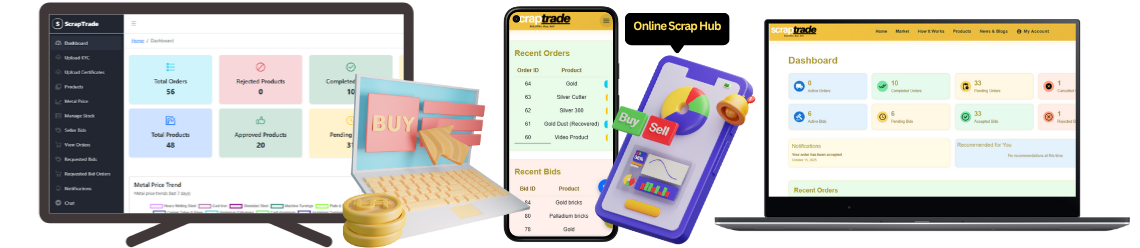
Digital platforms that connect sellers and buyers, verify materials, handle logistics, and offer transparent pricing (e.g. ScrapTrade) reduce friction and risk. - Technological Upgrades
Investing in shredders, magnetic separation, sensor-based sorting can improve scrap quality and increase revenue per tonne.
Role of Export & Domestic Regulation
- Australia is considering stronger regulation on export of unprocessed ferrous scrap. The Australian Steel Institute has called for national bans on such exports to ensure raw material feeds domestic industry. steel.org.au+1
- Waste export laws and environmental compliance push recyclers to process more scrap domestically. This is raising local capacities, which could mean better prices locally as supply chain efficiencies improve. IMARC Group+1
How Online Platforms Fit In (Including ScrapTrade)
Online scrap trading platforms play an important and growing role:
- Provide transparency: Prices, quality expectations, buyers verification.
- Help sellers find competitive offers quickly compared to local yard negotiation.
- Handle logistics or coordinate pick-ups & collections.
- Create trustworthy environments with payment protection (like escrow), which is especially important in the fragmented ferrous scrap market.
For example, sellers of bulk steel or iron who use digital platforms can often reach a wider pool of buyers (including industrial recyclers) and reduce transport costs or middleman fees.
What to Expect in 2025-2028
Based on trends, heres what to expect:
- Continued growth in demand thanks to sustainability targets and policies requiring recycled content.
- Steelmakers increasing use of recycled ferrous scrap via EAF and similar low-carbon technologies.
- Stricter regulation around waste export and processing of ferrous material ensuring more scrap is handled domestically.
- Prices continuing to fluctuate but likely improving for well-sorted, clean bulk ferrous scrap.
Conclusion
The Australia ferrous scrap recycling market is poised for growth. The combination of policy shifts, sustainable steel production, expanding regulation, and demand from construction/manufacturing makes ferrous scrap increasingly valuable. Sellers who can offer volume, quality, and clean, sorted ferrous materialwhile leveraging online platforms like ScrapTradeare best placed to profit.