With technology advancing rapidly, old computers, laptops, and peripherals quickly become obsolete. Instead of letting these electronic devices go to waste, they can be recycled or sold through a computer scrap auction, turning e-waste into profit.
What is a Computer Scrap Auction?
A computer scrap auction is a structured sale where businesses, organizations, or individuals sell old, unused, or obsolete computer equipment to the highest bidder. These auctions can be conducted physically or online, making it convenient for buyers and sellers across regions.
Items typically sold in computer scrap auctions include:
- Desktops and laptops
- Servers and networking equipment
- Printers, scanners, and peripherals
- Circuit boards, RAM, CPUs, and storage devices
- Cables, batteries, and other electronic accessories
Why Participate in Computer Scrap Auctions?
1. Profit from Valuable Components
Even outdated computers contain valuable metals like copper, gold, aluminium, and other recyclable materials.
2. Sustainable E-Waste Management
Recycling computers prevents toxic materials like lead, mercury, and cadmium from harming the environment.
3. Cost-Effective Procurement
Businesses or recyclers can acquire bulk computer scrap at lower costs compared to buying new components.
4. Transparent and Legal Trading
Auctions provide a regulated, legal, and transparent platform for both buyers and sellers.
Types of Computer Scrap Auctions
1. Corporate Auctions
Companies often auction off surplus, outdated, or decommissioned computer equipment.
2. Government Auctions
Government offices, educational institutions, and public sector units auction obsolete IT assets and electronics.
3. Online Computer Scrap Auctions
Digital platforms allow buyers to participate remotely, with detailed catalogs, photos, and real-time bidding features.
How to Participate in a Computer Scrap Auction
- Check Auction Notices
Look for official announcements detailing available equipment, auction dates, and bidding procedures. - Register as a Bidder
Provide identification, company documents (if applicable), and any required deposits. - Inspect Equipment (If Allowed)
Review detailed catalogs, photos, or inspect the items physically to assess quality and quantity. - Place Your Bids
Submit bids online or in-person according to auction rules. - Payment and Collection
Successful bidders complete payment and arrange transport or collection of purchased equipment.
Tips for Successful Computer Scrap Auctions
- Know Market Values: Research current scrap metal prices and component resale values.
- Set a Budget: Avoid overspending by determining maximum bids in advance.
- Focus on Valuable Components: Servers, CPUs, and circuit boards often yield higher returns.
- Follow Auction Rules: Adhere to timelines, payment conditions, and collection procedures.
Online Platforms for Computer Scrap Trading
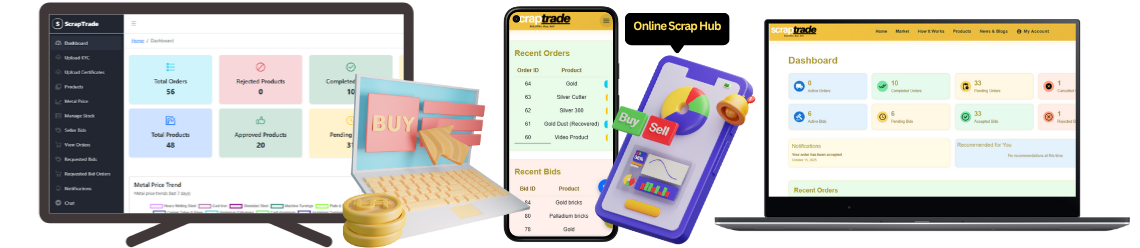
Platforms like ScrapTrade connect verified scrap buyers and sellers, providing:
- Secure online bidding and payments
- Real-time updates on listings and auctions
- Verified buyer and seller network
- Logistics support for collection and delivery
Conclusion
A computer scrap auction is a profitable, sustainable, and transparent way to buy or sell obsolete IT equipment. Whether you are a business, recycler, or scrap dealer, participating in these auctions ensures access to high-value components while promoting environmentally responsible e-waste management.
Platforms like ScrapTrade provide a trusted online marketplace for buying and selling computer scrap and other electronic waste securely and efficiently.