If you’ve ever wondered how businesses sell scrap metal by the container load instead of by the trailer, you’re in the right place. If you’re new to this side of things, selling scrap in bulk is worth understanding properly, and we’ll cover the essentials here.
When you first look into bulk scrap, a lot of the terminology can feel a bit opaque. Minimum order quantities, container loads, grades, net weights, FOB and CIF terms — none of it is complicated in itself, but there’s quite a lot of it, and it all adds up. The good news is that underneath the jargon, this is a fairly straightforward business of matching material you have with a buyer who needs it. Let’s work through the main pieces so none of it catches you off guard.
What a Minimum Order Quantity Actually Means
A minimum order quantity, or MOQ, is simply the smallest amount of material a buyer is willing to purchase in one go. In scrap trading, that usually means a weight in tonnes rather than a number of items. A buyer might only be interested if you’ve got five tonnes of steel or more, because anything less isn’t worth the freight and handling.
Different materials carry different minimums for exactly this reason. A high-value metal like copper might have a low MOQ because even a small amount is worth good money, while low-value steel needs a much bigger volume before anyone will come and collect it. So when a buyer quotes you a minimum, what they’re really telling you is where that material’s economics break even.
How Container Loads Work
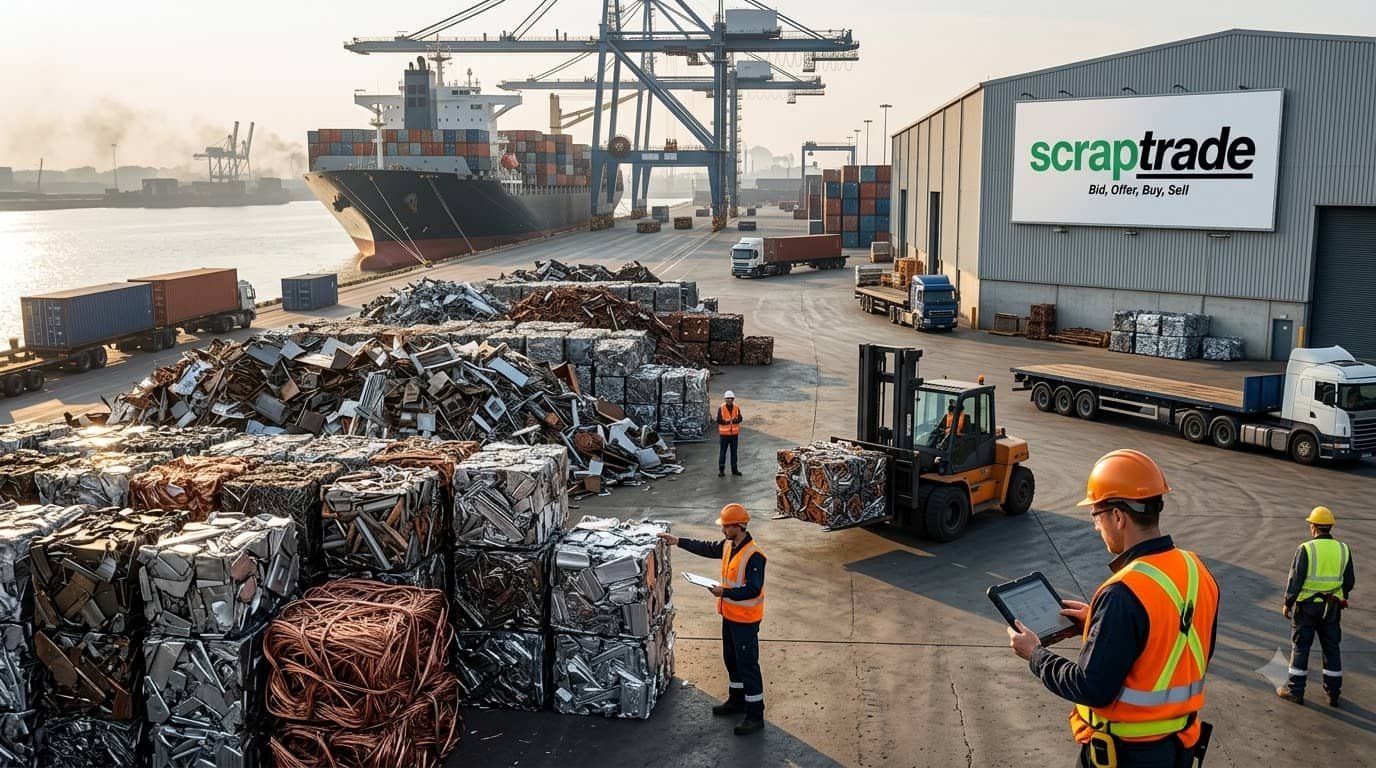
A container load is exactly what it sounds like: enough scrap to fill a whole shipping container. In practice that means roughly 20 tonnes or more in a standard 20-foot box, though the real limit is often weight rather than space. Dense metals like steel will hit the weight limit well before the container is visually full.
This is where density becomes the thing to think about. Heavy, compact material like steel turnings or plate offcuts will fill a container’s weight allowance quickly, while lighter scrap like aluminium extrusion or mixed household goods might fill the whole box and still leave weight allowance unused. Knowing roughly where your material sits on that scale makes it much easier to plan a load.
How Bulk Scrap Is Priced
Bulk scrap prices are usually quoted per tonne, and they move around based on a handful of things: the type of metal, how clean and well-sorted it is, what the global market is doing, and how far it has to travel. Two loads of the same metal can fetch quite different prices just because one is clean and close to a buyer while the other is contaminated and remote.
Timing plays a part as well. Metal prices fluctuate weekly, sometimes daily, and a quote you get on a Monday may not hold by Friday. Most serious buyers will give you a price that’s valid for a set period, and locking in a supply arrangement can protect you from the worst of the swings if your business generates scrap steadily.
What Bulk Buyers Are Looking For
Bulk buyers tend to prefer suppliers who can supply regularly rather than someone with a single large pile to offload. A steady flow of material lets them plan their processing, their freight, and their own sales. That’s why a smaller supplier who can deliver every month is often more valuable to them than a big one-off seller.
They also care a great deal about what’s in the load, and more importantly what shouldn’t be. A single piece of the wrong material — a chunk of concrete in a steel load, or plastic contamination in a copper load — can be enough to have the whole load downgraded or rejected. Clean, well-sorted material is genuinely worth more, and buyers remember suppliers who get this right.
Working Out How Much You Actually Have
One of the first questions any bulk buyer will ask is how much material you’ve got, and they mean weight, not volume. If you can give them a realistic tonnage, you’re far more likely to get a sensible conversation started. A rough estimate based on what you can see is a reasonable starting point, but an actual weighbridge ticket carries far more weight, literally and commercially.
For businesses that generate scrap steadily, keeping records of what comes out of the workshop each month is genuinely valuable. Even simple notes about roughly how much of each metal you produce give you something concrete to talk to buyers about, and they make it much easier to spot whether you’re reaching the quantities a bulk buyer would find interesting.
Where to Go From Here
Once you understand how bulk buyers think and what they’re actually paying for, the whole process becomes far more predictable and far more profitable. If you want the full picture, our guide to selling scrap in bulk covers container loads, minimum orders, and MOQs in detail.
If you’re not confident telling one grade from another, how to identify scrap metal is a straightforward place to start. Once you’ve got the material side sorted, the commercial side falls into place much more easily.
None of this needs to be learned all at once. Most businesses that do well with bulk scrap started by selling smaller quantities locally, learned what buyers actually wanted, and built up to larger loads as their volume and confidence grew. If that’s the path you’re on, the most useful first step is simply to find out what you’ve got and roughly how much of it there is. Everything else follows from there.