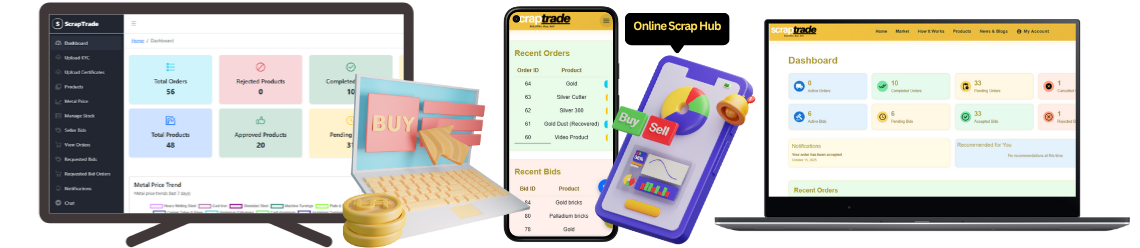

The scrap trading industry can be highly profitable, but operational costs can significantly affect margins. Whether you run a scrap yard or trade scrap online, minimizing costs without compromising efficiency is crucial. Platforms like ScrapTrade provide tools that help traders streamline operations, buy scrap online, and sell scrap online efficiently.
Key Areas to Reduce Operational Costs
1. Streamline Logistics
Transportation is one of the largest expenses in scrap trading. To reduce costs:
- Use GPS and route optimization tools to minimize fuel consumption
- Consolidate shipments to avoid multiple trips
- Schedule pickups and deliveries efficiently using platforms like ScrapTrade
2. Digitise Inventory Management
Manual tracking of scrap inventory can lead to errors and waste. Digitisation can:
- Reduce labor costs and paperwork
- Keep real-time records of scrap types, weights, and locations
- Prevent losses due to misplaced or miscounted materials
Using apps like the ScrapTrade App helps manage inventory digitally while connecting with verified buyers and sellers.
3. Automate Pricing and Bidding
Manual pricing and negotiation can be time-consuming:
- Use AI-driven pricing tools on ScrapTrade to quickly evaluate scrap metal prices
- Receive competitive bids from multiple buyers online
- Sell scrap online at the best possible price without spending extra hours on negotiations
4. Reduce Energy and Operational Waste
Scrap yards consume energy for machinery, sorting, and processing:
- Optimize equipment usage and schedule maintenance to prevent breakdowns
- Implement energy-efficient solutions and recycling practices
- Reduce scrap contamination to avoid losses in material resale
5. Leverage Verified Online Networks
Working with verified buyers and sellers reduces risks:
- Avoid fraud and late payments
- Reduce costs associated with chasing payments or resolving disputes
- Access multiple offers for your scrap, ensuring competitive pricing
ScrapTrade provides a trusted marketplace to connect with verified buyers and sellers, helping streamline operations and reduce unnecessary expenses.
6. Consolidate Suppliers and Vendors
- Negotiate bulk deals with trusted suppliers
- Reduce transport and coordination costs by working with fewer, reliable vendors
- Track supplier performance digitally to maintain efficiency
7. Optimize Labor and Staffing
- Train staff to use digital tools and apps effectively
- Reduce dependency on manual tasks such as record-keeping and phone negotiations
- Use performance data to schedule shifts efficiently and reduce overtime costs
Benefits of Reducing Operational Costs
- Higher Profit Margins: More savings directly increase your bottom line
- Efficient Operations: Streamlined processes reduce delays and errors
- Sustainability: Less energy and resource waste support eco-friendly practices
- Market Competitiveness: Lower costs allow you to offer better prices to buyers
Conclusion
Reducing operational costs in scrap trading involves optimizing logistics, digitising inventory, automating pricing, and leveraging verified networks. Platforms like ScrapTrade make it easy to buy scrap online and sell scrap online efficiently while minimizing overheads.
By adopting digital tools, streamlining operations, and connecting with verified buyers and sellers, scrap traders can maximize profits, reduce waste, and run a more sustainable and competitive scrap business.