
The scrap industry has always been vital to recycling and resource recovery, but it hasnt been without its challenges. In the mid-20th century, theft of metalsespecially copper wiring, lead, and aluminiumwas widespread. To address this, the UK introduced the Scrap Metal Dealers Act 1964, a law designed to regulate the trade of scrap metals and improve accountability among dealers.
While this Act was groundbreaking at the time, it was eventually replaced by modern legislation like the Scrap Metal Dealers Act 2013. Still, understanding the 1964 Act shows just how far the industry has comeespecially now with platforms like ScrapTrade, which bring full transparency and security into scrap trading.
What the Scrap Metal Dealers Act 1964 Required
Under the Act, scrap metal dealers were subject to new rules that aimed to make the trade safer and more regulated. Some key features included:
- Registration Local authorities kept registers of all scrap metal dealers operating in their area.
- Record Keeping Dealers were required to record transactions, including details of sellers and the type of metal sold.
- Trading Restrictions The law tried to cut down on stolen metal entering the supply chain.
This was one of the first serious attempts to regulate an industry that had previously operated with little oversight.
Why the Act Became Outdated
By the early 2000s, the 1964 Act was seen as ineffective. Scrap theft had evolved, and criminals often found loopholes. Cash payments made it easier to move stolen goods undetected, and penalties for non-compliance werent strong enough.
This led to the Scrap Metal Dealers Act 2013, which tightened regulations, banned cash payments, and introduced stricter licensing requirements for dealers.
From 1964 to Today: The Evolution of Scrap Trading
The industrys journey from the 1964 Act to today shows a shift toward transparency, professionalism, and sustainability.
- Then (19642013): Local registration, minimal oversight, mostly cash trading.
- Now (2025): Digital platforms, global marketplaces, escrow-protected payments, and strong regulation.
Why ScrapTrade Is the Modern Equivalent of Regulation
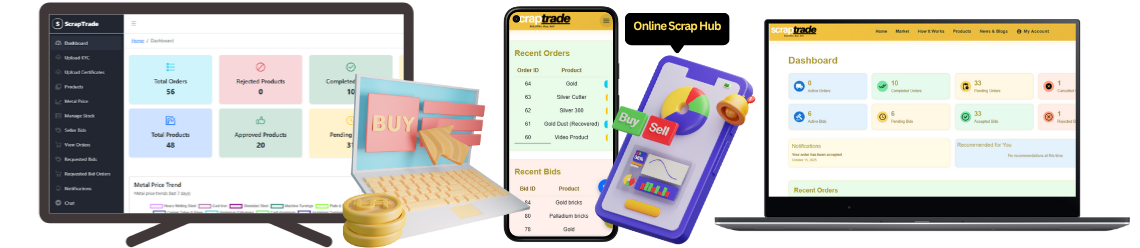
If the Scrap Metal Dealers Act 1964 was about registration and records, ScrapTrade takes those ideas and modernises them for todays digital-first world.
Heres how ScrapTrade brings security and trust into scrap trading:
- Verified Buyers & Sellers Just as the 1964 Act required registration, ScrapTrade verifies every user.
- Digital Records Every transaction is logged securely online, preventing fraud.
- Escrow Payments No risky cash deals; all payments are safe and traceable.
- Global Reach Unlike the local focus of the 1964 Act, ScrapTrade connects you to worldwide buyers.
- Market Transparency Live scrap prices give sellers fair valuesomething missing in the past.
Final Thoughts: From Law to Marketplace
The Scrap Metal Dealers Act 1964 was an important step in regulating scrap trading, but it belonged to a different era. Today, platforms like ScrapTrade not only meet the goals of that lawsecurity, accountability, and fairnessbut also go beyond by offering convenience, competitive pricing, and sustainability.
If youre looking to sell scrap in todays market, the old way is history. Start with a smarter, safer, and more profitable system through the ScrapTrade Marketplace.