
The scrap industry is closely tied to global commodity markets. Prices for metals like copper, aluminium, steel, and brass fluctuate based on worldwide supply, demand, and economic factors. These global movements have a direct impact on local scrap dealers, shaping their buying, selling, and pricing strategies.
Even small shifts in international scrap markets can influence what local buyers are willing to pay for your materials. Understanding this connection is essential for anyone trading scrap online or offline.
Why Global Scrap Prices Matter
- Influence on Local Pricing
Local dealers often set their rates based on international metal prices. For example:- If copper prices rise globally, dealers pay more for copper scrap locally.
- If aluminium prices drop internationally, local dealers may reduce their offers to sellers.
- Supply and Demand Dynamics
Global shortages or surpluses affect local availability. When demand increases internationally, local scrap materials become more valuable. Conversely, oversupply can lower prices. - Exchange Rates and Import/Export Policies
Local dealers are impacted by currency fluctuations and import/export restrictions. For instance, if the Australian dollar weakens against major currencies, exporting scrap becomes more profitable, pushing local dealers to adjust buying prices. - Market Competitiveness
Dealers must remain competitive while adapting to global price changes. This affects:- Purchase offers to scrap sellers
- Negotiation margins
- Frequency and volume of scrap purchases
- Predicting Profitability
Local dealers who track global scrap metal trends can predict the best times to buy and sell, improving profitability and operational efficiency.
How Online Platforms Help Local Dealers
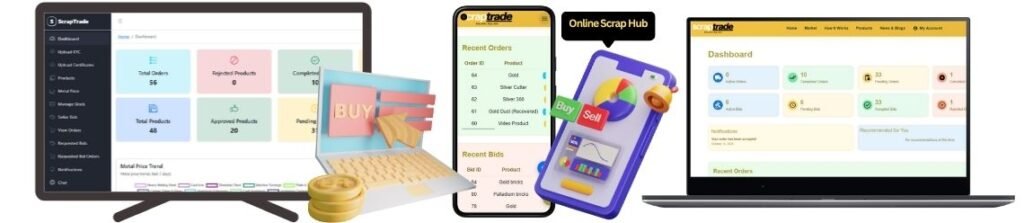
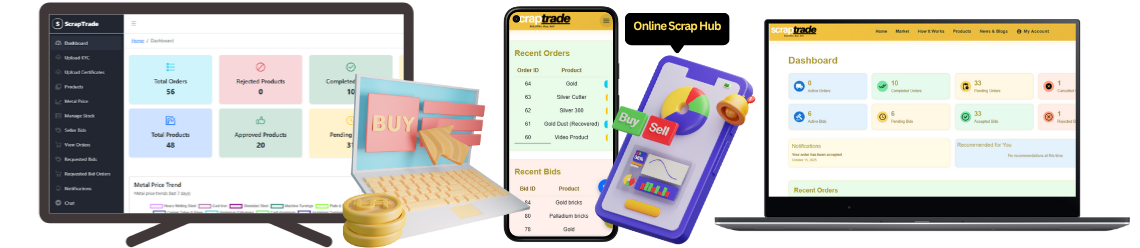
Digital marketplaces like ScrapTrade bridge global and local scrap markets. Here’s how:
- Real-Time Market Data: Dealers can access current global and local scrap prices.
- Verified Buyer-Seller Network: Platforms connect local dealers with international buyers, widening opportunities.
- Transparent Trading: Escrow-protected payments and verified transactions reduce risk.
- Efficient Logistics: Integrated pickup and delivery solutions streamline operations.
By using platforms like ScrapTrade, local dealers can respond quickly to global price changes and make informed trading decisions.
Tips for Local Scrap Dealers
- Monitor Global Trends: Track metals like copper, aluminium, and steel.
- Use Digital Platforms: Expand your network via ScrapTrade to stay competitive.
- Negotiate Smartly: Adjust local prices based on global movements.
- Diversify Scrap Inventory: Trading multiple scrap types can protect against price volatility.
- Stay Educated: Learn about international regulations, tariffs, and commodity forecasts.
Conclusion
Global scrap prices directly influence local dealers, affecting buying rates, negotiation strategies, and profit margins. By understanding these trends and leveraging digital platforms like ScrapTrade, local dealers can trade smarter, stay competitive, and maximize revenue while supporting sustainable recycling practices.