
At first glance, scrap trading and recycling may seem similar they both deal with discarded materials and sustainability. However, these terms describe different stages and purposes within the waste management and resource recovery process.
Scrap trading is primarily about buying and selling recyclable materials, while recycling focuses on processing waste into reusable raw materials. Together, they form a critical cycle that supports environmental sustainability and the global economy.
What Is Scrap Trading?
Scrap trading is the process of buying and selling scrap materials such as metals, plastics, e-waste, and paper. Traders act as intermediaries between waste generators and recyclers or manufacturers.
Key aspects of scrap trading include:
- Market-Driven: Prices depend on global commodity rates, demand, and material quality.
- Buying and Selling: Traders earn profits by sourcing scrap at lower prices and selling to recyclers or industrial buyers.
- Wide Variety of Materials: Metals (copper, aluminium, steel), e-waste, paper, plastics, and automotive scrap are commonly traded.
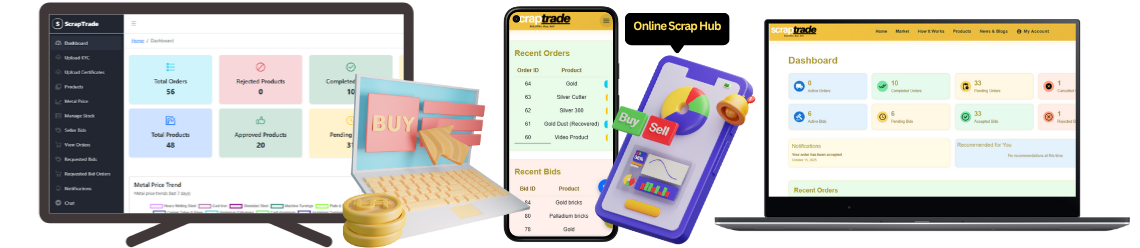
- Digital Platforms: Modern scrap trading can happen online via platforms like ScrapTrade, connecting verified buyers and sellers instantly.
Through scrap trading, waste is given monetary value, incentivizing collection and responsible disposal.
What Is Recycling?
Recycling is the process of transforming waste materials into reusable raw materials. This involves collection, sorting, cleaning, processing, and manufacturing.
Key characteristics of recycling include:
- Material Processing: Scrap metals are melted, plastics are reprocessed, and paper is pulped.
- Environmental Focus: Recycling reduces landfill waste, conserves natural resources, and saves energy.
- Production-Oriented: Recyclers convert raw scrap into materials that manufacturers use to produce new products.
- Regulatory Compliance: Recycling operations often follow environmental standards and safety regulations.
In short, recycling transforms discarded items into something valuable for production, whereas scrap trading connects sellers with buyers for these materials.
Key Differences Between Scrap Trading and Recycling
| Feature | Scrap Trading | Recycling |
|---|---|---|
| Primary Purpose | Buying and selling scrap for profit | Converting waste into reusable materials |
| Focus | Market and price-driven | Environmental sustainability and resource recovery |
| Activities Involved | Listing, negotiating, transporting, and selling scrap | Sorting, processing, cleaning, and manufacturing |
| Participants | Traders, buyers, and sellers | Recycling plants, manufacturers, and waste processors |
| Platform | Can be online or offline; digital marketplaces like ScrapTrade | Industrial facilities, municipal recycling centers |
| Profit Model | Profit earned from trading scrap materials | Value comes from processed raw materials and cost savings |
How Online Scrap Trading Complements Recycling
Modern platforms like ScrapTrade bridge the gap between scrap trading and recycling:
- Connecting Sellers to Recyclers: ScrapTrade helps sellers reach verified buyers who then recycle or repurpose materials.
- Ensuring Transparency: Sellers know the fair market price for their scrap, encouraging more collection and reducing waste.
- Streamlining Logistics: Integrated transport solutions ensure scrap reaches recycling centers efficiently.
- Supporting Sustainability: By facilitating scrap trading, more materials are diverted from landfills into productive use.
Essentially, scrap trading drives the supply chain for recycling, making it more profitable, accessible, and organized.
Benefits of Understanding the Difference
Knowing the distinction between scrap trading and recycling helps businesses and individuals:
- Make Informed Decisions: Decide whether to sell scrap for profit or process it for reuse.
- Maximize Value: Choose platforms like ScrapTrade to get fair pricing for scrap materials.
- Contribute to Sustainability: Support a circular economy where waste becomes a resource.
- Optimize Operations: Businesses can manage both trading and recycling strategies effectively.
Conclusion
While scrap trading and recycling are closely related, they serve different roles in the resource recovery cycle. Scrap trading focuses on the market and profit, while recycling emphasizes processing and sustainability.
By combining both, businesses and individuals can earn revenue, reduce waste, and contribute to a greener planet. Platforms like ScrapTrade make it easier than ever to buy scrap online, sell scrap online, and ensure materials are recycled efficiently.