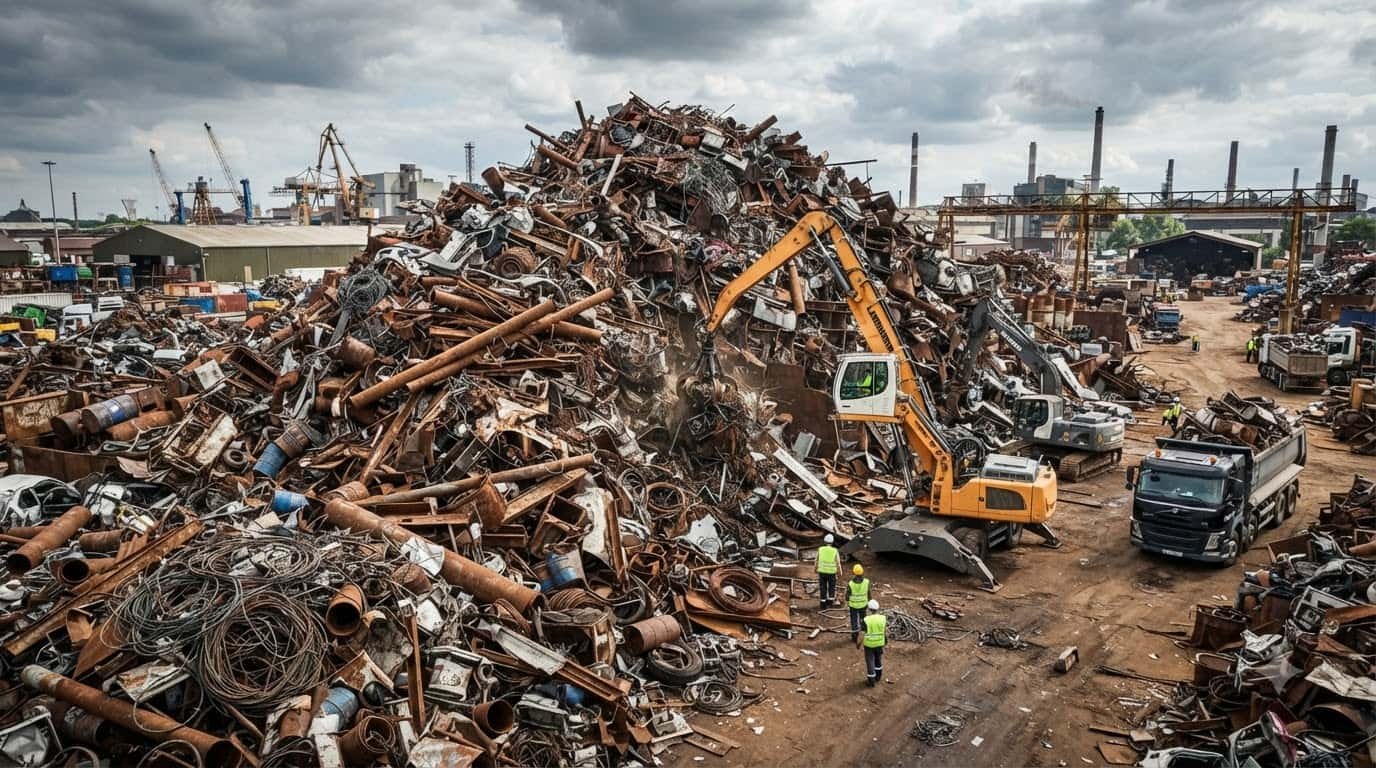
Starting a scrap business with limited resources is genuinely possible. Starting one with no costs, no effort and no risk is not, and sorting out that distinction early is worth more than any advice you’ll get later. If you’re working out what a good deal actually looks like, the tips for successful scrap deals on ScrapTrade are a sensible place to start.
One practical point most guides skip: mixed loads are not a problem to be apologised for, they’re a normal part of the trade, and there’s a whole market of buyers set up to handle them. Being able to quote one with confidence comes from understanding what you’re actually selling, which the selling mixed and unsorted scrap loads guide lays out step by step.
Finding Scrap and Building Local Supply
Scrap is generated everywhere, all the time. Factories produce offcuts every week, workshops clear out old equipment, construction sites produce offcuts and demolition material, and households eventually get rid of the whitegoods in the shed. Every one of those is a potential source, and most of them are already being handled by someone, which is the part beginners tend to underestimate.
Yards themselves are a supply source as much as a destination. A yard with stock it hasn’t sold in months, mixed loads nobody has time to sort, or material that’s too far from its usual buyers is often glad of someone who can list it online and find a buyer elsewhere.
Comparing Offers and Knowing What a Deal Is Worth
The single most valuable habit you can build is comparing offers properly. Three quotes on the same load is a minimum, not a luxury, because the spread between them tells you what the material is actually worth this week rather than what one yard hopes you’ll accept.
Work every deal out to a net figure before you agree to it. Price per tonne, transport cost, expected deductions, and the time the whole thing will take. It’s a five-minute calculation that turns a vague sense of profit into a number you can actually trust.
Risks, Costs and Honest Numbers
There’s also a cost side that’s easy to ignore when you’re excited about a deal. Fuel, vehicle wear, your own time, and the cost of waiting three weeks for payment are all real, and they’re the difference between a business that makes money and one that merely feels busy.
Start small enough that a mistake teaches you something instead of costing you everything you have. A first deal should be a load you can afford to get wrong, because you will get something wrong, and the point of the early deals is to learn cheaply.
Where the Money Is Made Across the Scrap Chain
Scrap changes hands several times between a workshop floor and a refiner, and money is made at every one of those steps. Collectors gather it, yards consolidate and sort it, traders move it between regions, brokers connect buyers with sellers, and refiners or exporters eventually turn it back into usable metal. Each step earns a margin for the service it provides.
If you’re wondering where to put yourself, the honest answer is that it depends on what you already have. If you own a vehicle and don’t mind physical work, collection suits you. If you know yards and buyers and would rather not handle metal, matchmaking suits you. The mistake is choosing the model someone else insists is best.
Starting With Little Capital: What That Actually Means
The low-capital versions of this business, finding material, connecting sellers with buyers, helping yards reach buyers they’d never meet on their own, don’t require a yard, a weighbridge, a truck or stockpiles of metal. They still require a phone, time, fuel, licences in most states, and the patience to build trust with strangers who have no reason to trust you yet.
The practical first steps cost almost nothing, but they do cost something. Registering a business name, understanding what identification and record-keeping rules apply in your state, and spending a few weekends meeting local yard owners will set you back a small amount of money and a large amount of time. That exchange is worth making, because it’s the cheapest education this trade offers.
Getting Started
If there’s a shortcut in this trade, it’s that relationships compound. The people you treat properly in year one are the reason year three is easy, and there’s no way to fake that. And for a clear walkthrough of how sound deals are actually put together, the tips for successful scrap deals guide covers the essentials.
Whatever material you end up with, describe it as it actually is. The buyers who want sorted, graded metal will say so, and the buyers who handle mixed loads every day, which is most of them, will trust you for being straight about it. The selling mixed and unsorted scrap loads guide is the clearest explanation of how to do that well.
None of this is a promise that the money arrives easily. It’s a description of how an honest, accessible industry actually works, and the people who do well in it are the ones who treat it that way. Learn the materials, price your costs, keep your word, and the income part tends to follow. That’s the whole opportunity, and it’s a good one.