Starting a scrap metal business sounds daunting, but it’s genuinely one of the more approachable industries to get into if you know the basics. If you’re just getting to grips with how this industry works, the scrap trading glossary is a handy reference to keep close by.
It’s worth saying up front that this isn’t a get-rich-quick industry. The people who do well in scrap tend to be the ones who treat it as a proper business, keep decent records, and build up their knowledge one load at a time. That’s a slower path than some, but it’s a far more reliable one. When you come across terms you don’t recognise, the scrap trading glossary is worth a look.
How the Scrap Industry Fits Together
The scrap industry is really a chain of people, each adding a bit of value as material moves along it. Collectors gather it, dealers buy and consolidate it, yards sort and process it, and recyclers or manufacturers eventually turn it back into usable metal. Understanding where you sit in that chain is the first real decision you make.
It’s also an industry where knowledge compounds. Knowing which grade of metal you’re holding, who pays the most for it, and what deductions a buyer is likely to apply is worth real money over time. That knowledge mostly comes from handling material and asking questions, and there’s no shortcut for it.
What You Actually Need to Start
A common mistake is assuming you need a yard full of equipment before you’ve made your first dollar. Plenty of people start by collecting from a handful of local businesses, building up a regular supply, and only then investing in the gear that makes sense for the volume they’re actually doing.
There are also the less obvious costs to think about. Fuel, insurance, weighing equipment, storage, and the time spent driving between sites all add up, and they’re the difference between a venture that makes money and one that simply feels busy. Working out your real cost per tonne before you commit to anything is one of the most useful habits you can develop early.
Finding Material to Sell
Scrap comes from everywhere, which is what makes supply such an approachable problem. Workshops produce offcuts, construction sites produce offcuts and demolition material, households clear out old appliances, and factories produce the same offcuts week after week. Each of those is a potential supply source with its own rhythm.
It pays to be honest with yourself about what a supplier actually generates, too. A business that produces a small mixed pile every few months might be a nice occasional pickup, but it won’t sustain a trading operation. Matching the time you invest to the realistic volume behind it keeps you from chasing supply that never amounts to much.
Finding Someone to Buy It
The key thing to understand is that buyers aren’t all the same. A local yard wants clean sorted metal and easy handling; an exporter wants container loads of a single grade; a manufacturer wants consistent secondary material delivered on a schedule. Each of them values your scrap differently, and knowing who you’re really selling to shapes everything else.
Comparing offers properly is a skill in itself. The headline price per tonne rarely tells the whole story once freight, sorting requirements, moisture deductions, and payment terms are factored in. Two buyers offering the same per-tonne rate can leave you with quite different amounts in hand, and learning to spot that difference is worth more than chasing the highest number.
The Language You Need to Know
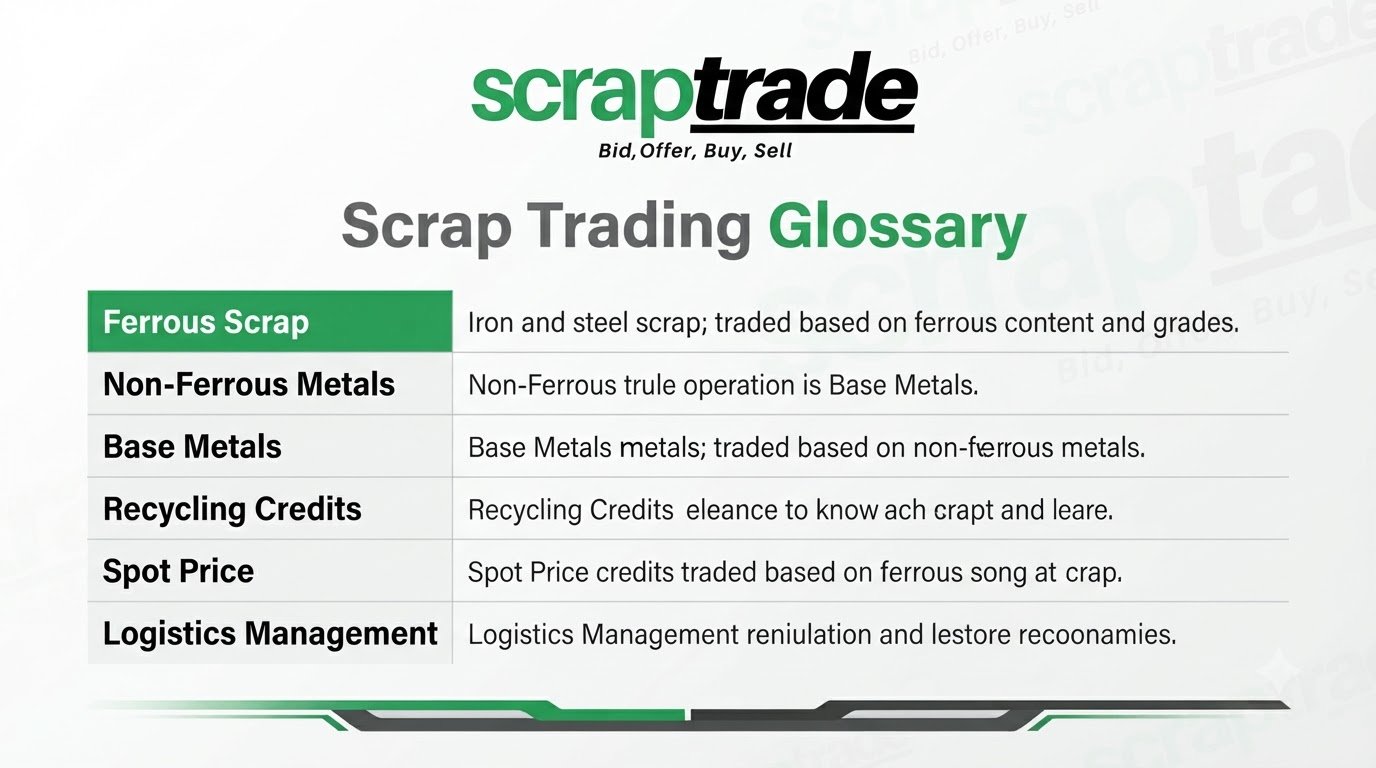
Every industry has its jargon, and scrap is no exception. Terms like MOQ, RFQ, gross weight, net weight, ferrous, non-ferrous, and grade get thrown around constantly, and not understanding them puts you at a real disadvantage when you’re negotiating or reading a buyer’s requirements.
There’s no need to learn it all before you start. Most people pick up the terms as they go, and having a reference to check against makes it far less intimidating. If you want the full set of definitions in one place, the scrap trading glossary covers the essential terms in plain language.
Where to Start
There’s no single right way into this industry, but there is a reliable pattern: learn the basics, start small, understand your numbers, and let volume follow reliability. For the terminology that comes up constantly in this trade, the scrap trading glossary is the reference most beginners find useful first.
Nobody gets all of this right on their first attempt, and that’s expected. The businesses that succeed are the ones that keep learning from each load, each buyer, and each mistake, rather than waiting until they understand everything before they begin.
There’s also something to be said for starting with a single material rather than trying to handle everything at once. Learning to recognise one grade well, finding a reliable buyer for it, and building a supply route that actually lasts is a genuine accomplishment. Once that first one is working properly, adding a second material is far easier, because the framework is already there and you’re not learning the basics at the same time as everything else.
Above all, keep your numbers honest. It’s very easy in the early days to focus on the price per tonne and conveniently forget the fuel, the hours, the deductions, and the waiting. The businesses that survive their first year are usually the ones that knew their real position even when it was uncomfortable, because you can’t fix a margin you haven’t measured.