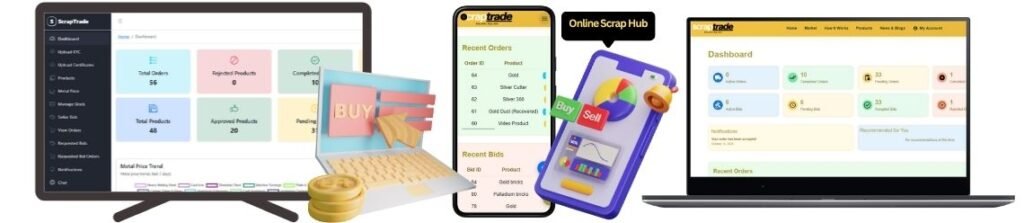
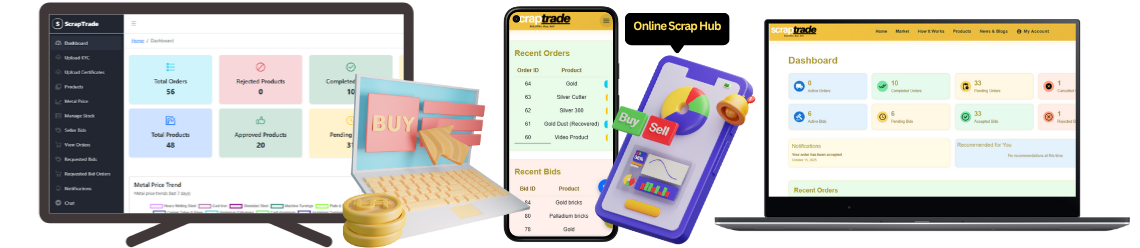

Everyone talks about digitising the scrap trade like it’s one big decision. In practice it’s a dozen small ones, and the businesses that get it right usually start with the smallest. If you’re weighing up what a proper inventory system should include, the scrap inventory management software guide on scrap.trade is a useful starting point.
For owners wondering where the budget should go, an honest starting point is the best scrap yard management software guide, which sets out what different systems actually do and what they replace.
Buyers, Sellers and Suppliers as Records, Not Memories
Every scrap business keeps a contacts list in someone’s head, and every scrap business eventually pays for it. Buyer enquiries that go unanswered, suppliers nobody follows up with, and offers that arrive after the material has already been sold are all customer management problems before they’re sales problems.
Software helps here mostly by reminding you, which is unglamorous and exactly the point. The task a human forgets on a busy Friday is the task that costs a deal on Monday morning.
Multiple Yards, More Stock and Records That Survive It
Agents and traders who manage stock they don’t own face the same issue in a different form. Keeping track of material held by different suppliers, how much of it is genuinely available and how quickly it moves is the actual work, and it becomes dramatically easier when every supplier records things the same way.
Automation works best on the boring parts: reusing a buyer’s details, copying weights and grades into a listing, sending the same reminder every week. The tasks nobody enjoys are always the cheapest ones to remove.
Choosing Software Without Buying Trouble
Implementation is genuinely the hard part, and where most projects quietly stall. Moving data across, retraining the team, and running two systems in parallel for a few weeks is uncomfortable, which is why the businesses that succeed tend to start small and accept that not everything has to change at once.
Free and paid tools both have their place, and the honest comparison is about time rather than features. A free spreadsheet costs hours every month; a paid system costs money and gives some of those hours back. Which side of that trade makes sense depends on volume, team size and what the owner’s time is actually worth.
Something that rarely gets said about record keeping in this trade is that the goal isn’t more data, it’s better decisions. A yard that knows its stock to the kiln and still can’t tell which supplier is worth another call has excellent records and a business that isn’t using them. The useful question to ask of any system, spreadsheet or otherwise, is what it helped the business decide this week.
Why Clear Inventory Records Matter
Inventory records are only useful when they help a business make better decisions about its available materials, which means recording more than a weight and a date. Material type, quantity, grade, location and whether the stock is actually available are the minimum that makes a record worth keeping, because those are the five things a buyer will ask about and everything else depends on them.
Consistency matters more than detail. A simple record kept the same way for every load beats an elaborate one that changes shape depending on who happened to be on the gate that day.
Spreadsheets, Software and Everything In Between
Dedicated systems cost money and take time to set up, and that trade is worth being honest about. What they buy is a single version of the truth, records entered the same way every time, and the ability for more than one person to work on them at once without a small argument breaking out.
The middle ground is a structured system that isn’t much more complicated than the spreadsheet it replaces. Most modern tools are built that way deliberately, because the jump from paper to something usable needs to be small enough that people will actually make it.
From Stock Records to Real Trading Opportunities
The shift isn’t really from phone calls to websites, it’s from chasing buyers to being found by them. A listing with a photo, an honest grade and a clear quantity answers most of a buyer’s questions before they’ve picked up the phone, and the ones who do call are already genuinely interested.
It works the other way too. Buyer requests tell you what the market is actually short of, which is a far more useful thing to know than last month’s price list, and it comes from the same screen as your listings.
Where to Go From Here
Records and software are tools, not a strategy. The strategy is still buying well, grading honestly and turning stock over, and all the tools do is make those three things visible. For a thorough walkthrough of what modern inventory systems should do, the scrap inventory management software guide on scrap.trade is the place to start.
None of this is a pitch for spending money. It’s a description of how a business with good records, a sensible process and the right tools ends up in a stronger position than one running on memory and luck. The technology is the easy part; the records are the part that actually matters.
If your records are now telling you what’s available and what isn’t, ScrapTrade is worth a look, because online listings turn that information into trading opportunities.